When to Harvest Garlic (+ How to Cure It for Storage)
There’s something deeply satisfying about growing garlic. Maybe it’s the way it quietly overwinters beneath a blanket of mulch, or the thrill of pulling a plump bulb from the soil in midsummer. Whatever it is, garlic has become one of my favorite crops—and if you’re growing it too, you’re probably wondering: when should I harvest my garlic?
That question isn’t always straightforward. The timing depends on when you planted, what variety you’re growing, and even the weather that season. But once you understand the signals, it gets easier. In this post, I’ll walk you through exactly when to harvest garlic, how to cure it for storage, and what you can do to grow bigger, healthier bulbs next season. I’m planning on updating this post once I get in my garlic bulbs for this fall’s planting this way you can see everything step-by-step. So be sure to check back in October when I’m planting!
This post is all about when to harvest garlic.
Table of Contents
Hardneck vs. Softneck Garlic: What You Need to Know
If you’re new to garlic growing, the first thing to know is that not all garlic is the same. There are two main types: hardneck and softneck.
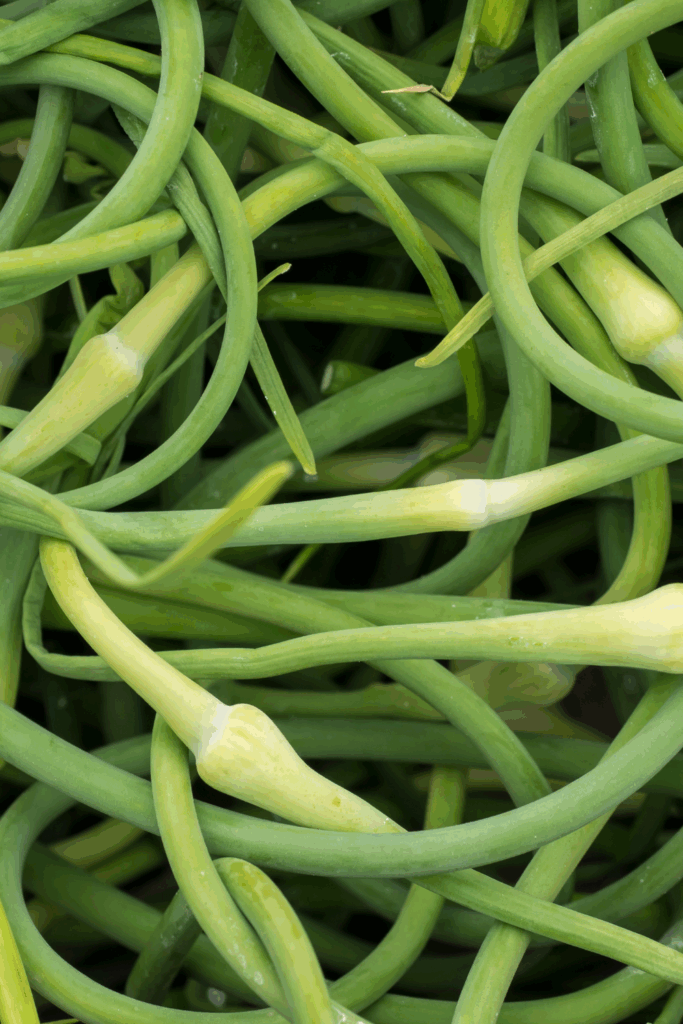
Hardneck garlic is typically grown in colder climates (like Zone 6) and is known for its strong flavor and beautiful scapes that appear in early summer. These scapes curl into whimsical spirals before straightening out—once that happens, it’s time to snip them so the plant can focus its energy on bulb development. What’s great about the garlic scapes is that they’re edible too! Once you snip them, don’t waste them. You can eat them raw dishes like a salad, cook them up (sauté, stir-fried, grilled, roasted), create a garlic scape pesto,
Softneck garlic, on the other hand, doesn’t produce a scape and has a softer, more flexible stem (hence the name). It’s what you usually see braided and hanging in farmhouse kitchens. Softneck varieties store longer and tend to have more cloves per bulb, but they don’t hold up as well to freezing temperatures.
In my Zone 6 garden, hardneck varieties like ‘Music’ and ‘German Extra Hardy’ have done especially well. I plant them in the fall, mulch them heavily, and forget about them until spring. They always surprise me with their resilience. This
When to Plant Garlic in Zone 6
If you’re thinking ahead, the best time to plant garlic in Zone 6 is mid to late October. Wait until after the first frost, and then it’s a mad dash to get them planted. If you’re considering planting garlic and haven’t gotten any bulbs, now’s the time to do it. I’m getting mine from Johnny’s Select Seeds (no I’m not sponsored!). Plantings must happen before the ground freezes. It’s one of the last planting tasks of the season, and there’s something peaceful about tucking garlic cloves into cool soil, knowing they’ll sleep all winter and wake up come spring.
It’s super crucial for the garlic to be exposed to cold temperatures. It needs cold temperature to properly vernalize, or to trigger growth. This process ensures a good harvest in the spring time (or whenever it’s time to harvest your particular variety).
To plant the garlic, each clove must be placed with the pointy side up, about 2 inches deep in the soil, and spaced 4 to 6 inches apart. Once planted, the bed should be covered with a thick layer of straw or shredded leaves to insulate the soil and keep weeds down. That’s it until the snow melts, if your area gets any snow.
Caring for Garlic in the Spring
As soon as things start warming up, garlic is one of the first green shoots to emerge. I usually give it a little compost or nitrogen boost early in the season and keep an eye on watering—especially during dry stretches in May and June.
When I see scapes forming on my hardneck garlic, I cut them off (and save them for pesto or stir-fries). This small step helps direct energy into forming larger bulbs underground. Not cutting the scapes off may lead to smaller bulbs. But we want the biggest bulbs possible!

So… When Do You Actually Harvest Garlic?
This is the part most people find tricky. It’s easy to jump the gun or wait too long. Much of the harvesting is determined by the variety that you plant. For example, I’m planting German Extra Hardy and Music varieties. The estimated time to maturity/days to harvest is 290 days. Yes, it’s that long!
You can certainly get varieties that don’t take that long to harvest. There are some softneck varieties that can be harvested in as little as 3 to 5 months. This is garlic that’s planted in the spring time. BUT, the majority of garlic grown is planted in the fall and harvested the following summer, and takes about 8 to 10 months.
Signs Garlic is Ready to Harvest
Garlic doesn’t give you a bright red signal when it’s ready (like tomatoes!) —but the clues are there.
The leaves tell the story. When the bottom few leaves have turned brown and dried out, and the top ones are still green, that’s usually the window. Gently dig around one or two bulbs to check their size and the tightness of their wrappers. If the bulb looks well-formed and the papery skin is still intact, it’s go time.
If you planted your garlic in October, like most Zone 6 gardeners do, you’ll likely be harvesting in July/August. Some years it’s earlier, some later, depending on the weather.
Harvesting Garlic Without Damaging It
When it’s time, I don’t pull garlic by hand. Instead, I use a garden fork to gently loosen the soil around each plant. Then I lift the whole thing—bulb, roots, and stalk—and shake off the dirt. It’s tempting to wash the bulbs right away, but don’t! They need to cure first.
How to Cure Garlic for Long-Term Storage
Curing garlic just means drying it out in a way that helps it last through the winter. You don’t want it to have moisture because that’s when you run into issues with mold.
Bundle them in groups of 5 or so and you can either hang them to dry, or use a shaded porch, shed, or even a well-ventilated basement can work. Just make sure they’re out of direct sunlight. Leave them hanging for about two to three weeks, until the outer skins are papery and the stems are dry all the way through.
After curing, trim off the roots and cut the stems down (unless you’re braiding softneck garlic). Then store the bulbs in a mesh basket in the pantry—someplace cool and dark with good airflow.
Hardneck garlic usually lasts through the new year, while softneck can go all the way into spring.
Final Thoughts
Garlic is the kind of crop that teaches you patience. It doesn’t demand much, but it rewards attention—especially when it comes to knowing when to harvest. It really puts things into perspective and let’s you appreciate growing your own food. There’s so much work, time, and love that goes into growing food, especially on a bigger scale. We’ve become so disconnected with out food and just expect it to always be on the shelf no matter what time of year.
Once you get the timing down and see those cured bulbs lined up in your pantry, you’ll understand why so many gardeners say garlic is one of their favorite crops to grow.
Whether you’re planting for the first time this fall or checking your leaves for signs it’s time to dig, I hope this post gave you the confidence to enjoy the process. Garlic might be quiet, but it’s a powerhouse in the garden—and the kitchen.
This post was all about when to harvest garlic.