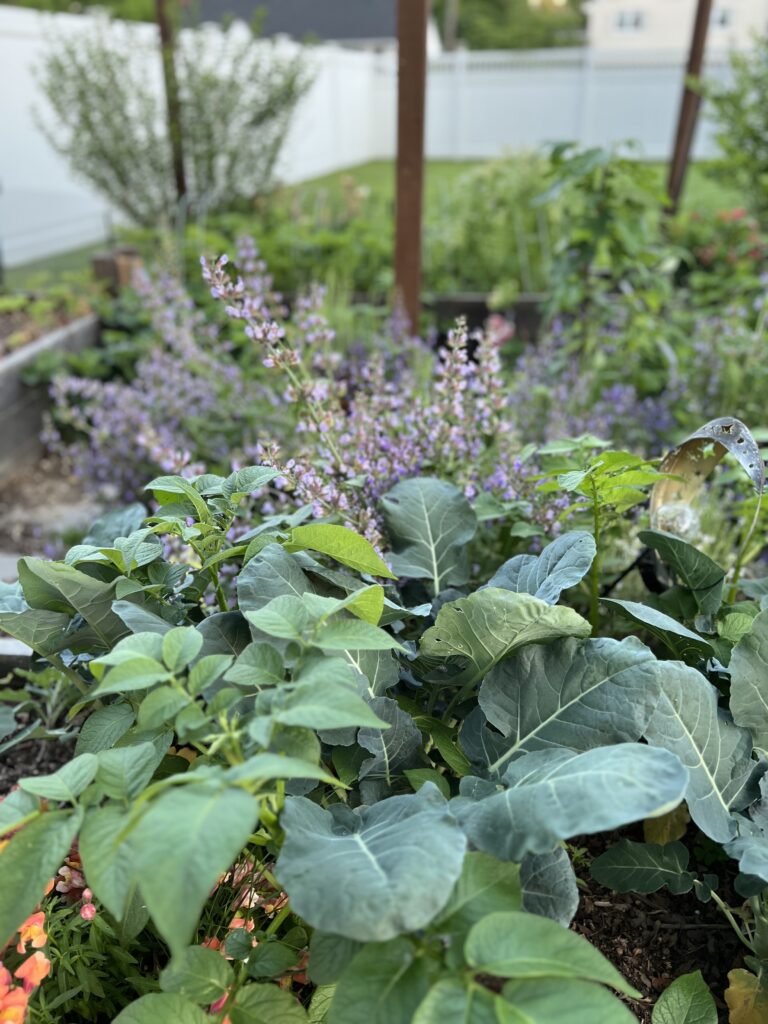
Backyard Privacy Ideas with Plants: Creating a Private Oasis
Transforming your outdoor space into a private oasis is easier than you think with these backyard privacy ideas with plants. Instead of relying solely on a solid fence, leveraging privacy plants and natural privacy screens can add visual and curb appeal, soften harsh lines, and provide year‑round coverage. Whether you have a sprawling yard or a small space, here are some of the best ways to block site lines and create a sense of seclusion in your own backyard.
We had a fence installed around our backyard for a couple of reasons:
- we live in an area with a lot of deer and the deer were roaming around freely in our yard.
- the deer loved to eat our vegetable garden and we used a few tactics to deter them before we decided to install a fence.
- our backyard needed a bit more privacy and so did the back of our house. Without the fence, you could see through the back of our house from the street. (This is one of the reasons why we’d eventually like our own land – more privacy!)
We plan on planting some trees and bushes in front of our fence because at the moment, it’s just a plain white fence and grass. It’ll really help with the curb appeal. I’ll be updating this post as we make our plant selections and get them in the ground. In the meantime though, I’m sharing my findings.
This post is all about backyard privacy ideas with plants.
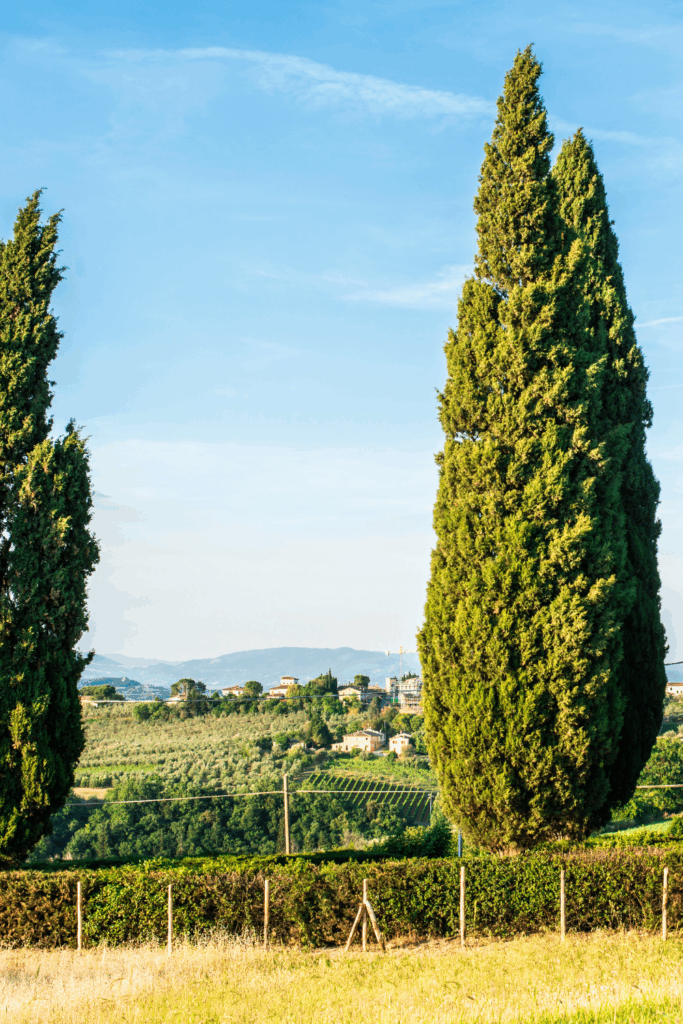
Table of Contents
Living Fence with Evergreen Trees & Shrubs
What are some options to choose from when you’re looking into adding elements for more privacy? Trees and shrubs are one way to add a touch of beauty to your landscaping.
A living fence is an effective way to achieve year‑round privacy and bring natural elements into your backyard patio or seating area. You’ll want to definitely look into what grows well in your growing zone before getting anything. Another suggestion I have is to also consult someone at a local nursery.
[RELATED POST: A Quick Guide to Plant Hardiness Zones Definition]
One thing we hadn’t thought of when thinking about planting in front of the fence was the heat that’ll radiate off of it during the summer time. We spoke to someone at our local nursery and he said this was a common mistake. So always consider a plant that’ll hold up well otherwise they get fried and die from the heat.
What are evergreens?
Evergreens are plants that don’t lose their leaves. They’ll continually grow leaves to replace the ones they’ve lost as they age and fall off. These types of plants are green all year long.
Plant options to consider
- Emerald Green Arborvitae or American Arborvitae: These evergreen trees form a dense, tall hedge that thrives in full sun and adapts to a variety of soil conditions. Although they’re trees, you can prune them to be the desired height or let them grow to their full height. They have a moderate growth rate and grow at 1 to 2 feet per year. As they get older though the growth will slow.
- Leyland Cypress: Fast‑growing and a hardy tree, it’s an excellent choice for quick screening but needs regular trimming to prevent overly tall growth. It can grow 1 to 2 feet or more per year, and if left to grow to their full height, they reach 60 to 70 feet tall. They also need a lot of space width-wise since they can growth 10 to 15 feet wide.
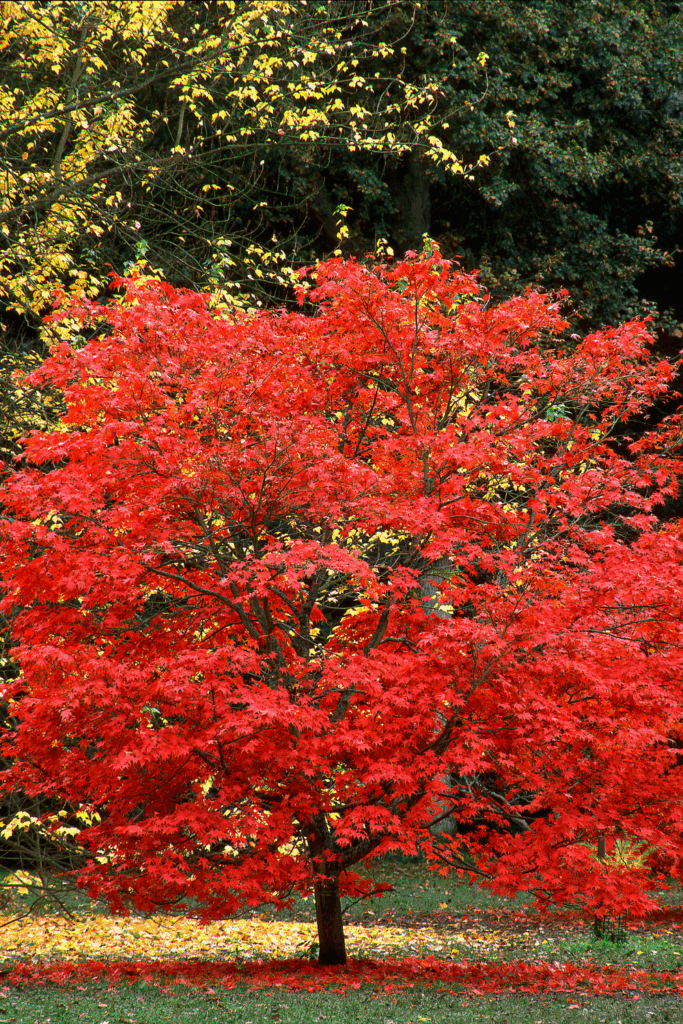
- Japanese Maples (selected cultivars): While deciduous trees, they offer superb visual interest and a moderate level of privacy in late spring through late summer.
- Tri-colored Dappled Willow: these shrubs provide colorful foliage that range from green to light pink. It has fast growth with dense branching and grows up to 8 to 10 feet tall, making it a great privacy shrub,
Plant these in a straight line about 5–8 feet apart for a solid barrier. Amend the soil with organic matter to encourage deep roots and year‑round screening.
Deciduous Options for Seasonal Privacy
Before we dive into deciduous trees and shrubs, what does ‘deciduous’ mean?
‘Deciduous’ means that a tree or shrub loses its leaves at some point during the year. Usually this is during the fall/winter time when the plant goes dormant. The leaves change color because they stop producing chlorophyll as they reach the period in which they stop growing. It’s a process that they go through that evergreens don’t.
Deciduous trees put on a show for us each year and many take up the hobby of “leaf peeping” to revel in nature’s spectacular colors.
“The trees produce carotenoid pigments, tannins, and anthocyanin pigments, all of which contribute to the vibrant reds, yellows, and oranges that emerge during leaf peeping season in the fall, as well as the darker purples and browns.” https://www.thespruce.com/deciduous-meaning-lists-of-examples-2131036
Examples of deciduous trees and shrubs that could be considered are:
- Hornbeam or Beech for a leafy privacy screen that allows natural light through in winter months.
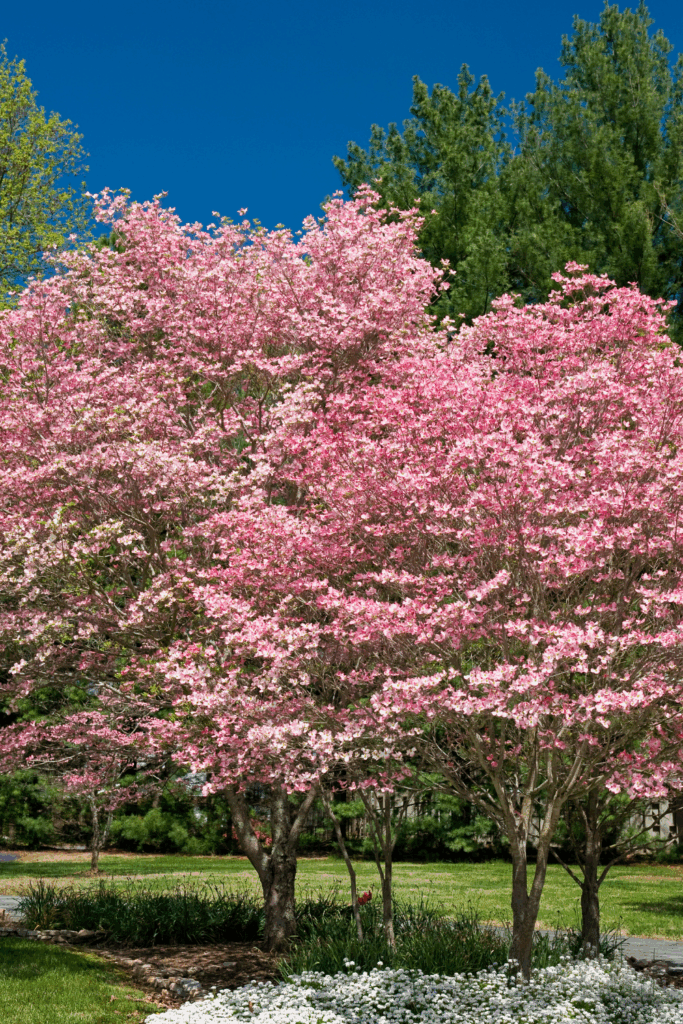
- Ornamental Trees like flowering cherries or dogwoods to add seasonal color and focal point interest. Cherry trees and dogwoods provide beautiful flowers in the spring time.
- Deciduous Shrubs (e.g., hydrangeas or forsythia) that can be cycled with evergreen plantings to maintain screening. Hydrangeas can provide flowers throughout the summer while forsythia flower in the spring. Hydrangeas have blue, pink, white, and limelight colored flowers that change with the acidity of the soil. Forsythia have bright yellow flowers.
Mixing deciduous options with evergreens gives you fresh spring growth and bright fall foliage, while still maintaining privacy plantings year‑round.
Tall Grasses & Ornamental Grasses
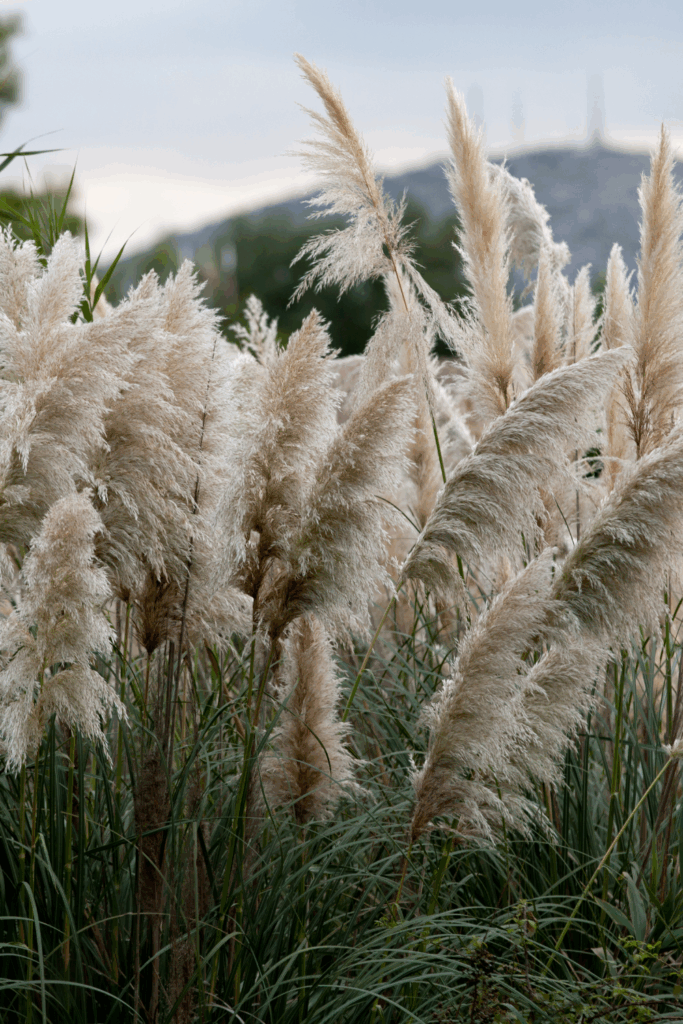
Tall and ornamental grasses are a simple way to add texture, privacy, and depth to your landscaping.
Some popular choices are:
- Maiden Grass or Feather Reed Grass: Hardy perennials that reach 4–6 feet tall, perfect for the back yard edge of a garden bed.
- Pampas Grass: Bold plumes in late summer serve as a soft design feature.
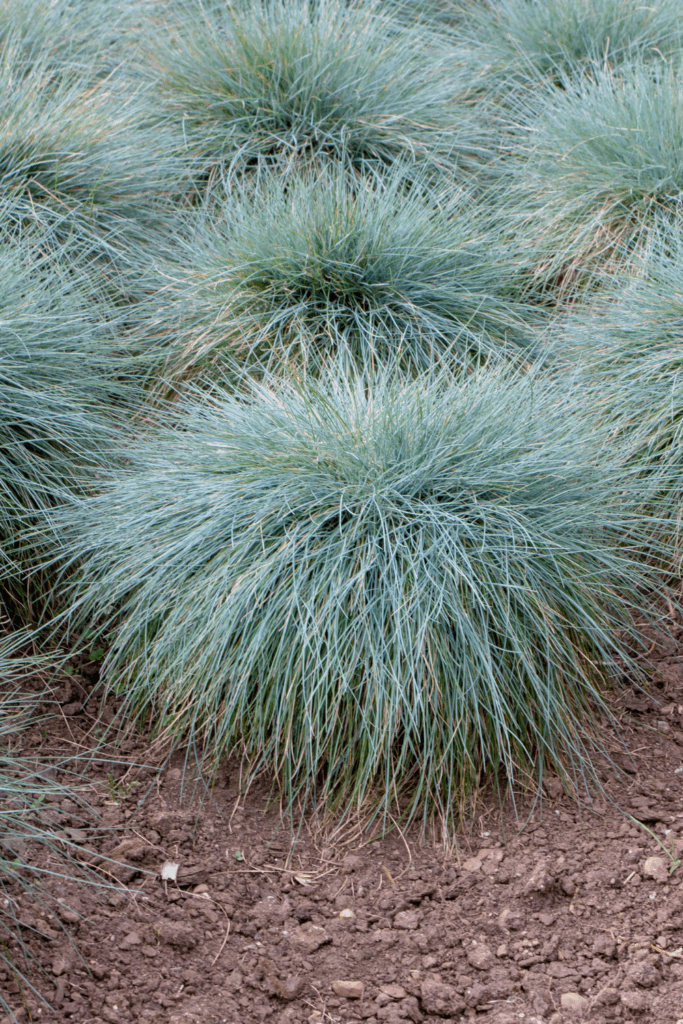
- Festuca glauca ‘Cool as Ice’ (Blue Fescue): a grass that’s said to be drought tolerant for anyone that’s in a more arid environment. This grass has a blue green foliage and is pretty compact.
These natural barriers thrive in full sun, need good drainage, and are little maintenance, making them an easy way to screen off apartment buildings, good neighbors, or patio areas. I’ve found that our grasses are super easy to deal with, even in a more shadier part of the garden/yard. They’re really adaptable like lawn grass.
One thing to keep in mind with grasses is that some can be quite invasive and very difficult to take out. Some grasses can even have pretty sharp blades.
Vertical Garden & Lattice Screens
A vertical garden on lattice walls or lattice panels is a clever idea for small gardens. This would be greatly to enclose off a patio area if you don’t want to close off the whole yard.
- Attach lattice panels to a wood fencing backdrop and train trumpet vines, clematis, or bamboo screen to climb it.
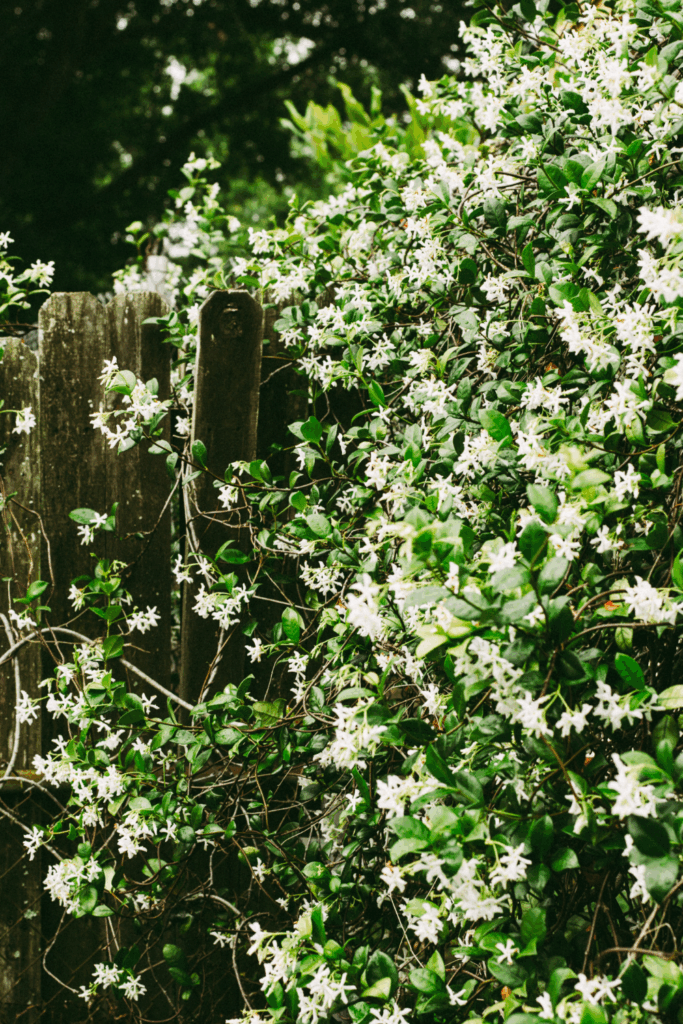
- Build a living fence with flower boxes and container gardens at the base, filled with favorite plants like ivy or jasmine.
This approach adds aesthetic appeal, visual interest, and an extra layer of privacy without occupying valuable yard space.
Container Gardens & Large Planters
When much space is at a premium, large planters filled with tall shrubs or small trees can define your patio area:
- Use American Arborvitae or bamboo in big pots for quick level of privacy. Using pots for bamboo is particularly important if you don’t want it to spread everywhere and take over everything. Bamboo is extremely invasive and hard to get rid of.
- Mix in ornamental grasses or tall perennials like mistflower to soften edges and blend with the surrounding environment.
This inexpensive backyard privacy idea lets you rearrange your setup by season to suit your specific needs.
Water Feature as a Privacy & Sound Barrier
A water feature not only acts as a focal point but also masks ambient noise from the outside world:
- Surround a small fountain with hardy plants, ornamental grasses, and evergreen shrubs for a self‑contained, private space.
- Even in the winter months, the sound of gently trickling water paired with large trees or deciduous shrubs creates a cozy sense of intimacy.
Outdoor Curtains & Wood Beams
For a soft, flexible barrier, outdoor curtains hung from wood beams or a pergola offer instant privacy fence ideas:
- Opt for weather‑resistant fabric in neutral tones to complement natural solutions like climbing vines on pergola posts.
- Pair with potted emerald green arborvitae or bamboo plant clusters for a lush, layered effect.
Combining Natural & Built Elements
Interior designers often recommend mixing natural barriers with a privacy fence or solid fence to soften edges:
- A low wood fencing topped with a row of evergreen plants provides a straight line backdrop and a lush green screen.
- Add ornamental trees and flower boxes for pops of color and to break up sight lines.
This best way approach creates a secret garden vibe while letting you adjust site lines and sunlight in your backyard.
Tips for Success
- Soil Conditions: Ensure well‑drained soil enriched with organic matter.
- Planting: Position tall shrubs at the back, ornamental grasses mid‑border, and perennials or flower boxes in front.
- Maintenance: Prune 1–2 times a year, check for pests, and add mulch to retain moisture without root rot.
Think about and play around with these backyard privacy ideas to craft a private space that feels like an extension of your home. Whether you choose a living fence, vertical garden, or a simple line of large planters, using privacy plantings is a great way to enjoy your outdoor space in complete seclusion.
This post was all about backyard privacy ideas with plants.