How to Dry Lavender (and 11 Ways to Use It)
There’s something so nostalgic and peaceful about the scent of lavender drifting through the house. It’s what I frequently use in the dryer while drying our clothes. I use drops of lavender essential oil on wool dryer balls, as I’ve steered away from dryer sheets a long time ago.
That’s a story for another time!
Whether you’re growing your own, grabbing a fresh bunch from the farmer’s market, or from your local store, learning how to dry lavender is a simple way to bring that calming aroma in your home year-round.
Dried lavender is beautiful, practical, and surprisingly versatile. In this post, I’ll walk you through exactly how to dry it—and then we’ll get into all the wonderful ways you can use it around your home, in your kitchen, and even as gifts.
This post is all about how to dry lavender.
As an Amazon Associate I earn on qualifying purchases. This post contains affiliate links, which means I make a small commission at no extra cost to you. I am in no way sponsored by any of the companies/products listed below and therefore have no bearing on the products I choose to review or recommend.
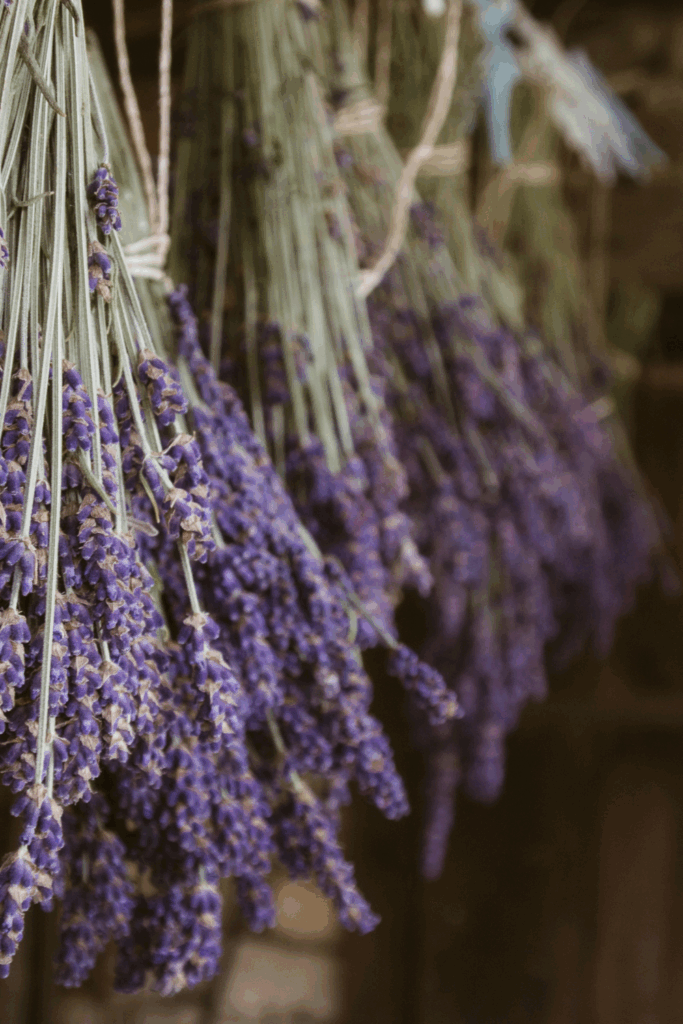
Table of Contents
Different Types of Lavender
It took me quite some time to grow lavender, to be honest. My first attempts failed – it can be a pretty picky plant in terms of its sun, soil, and watering needs. I’ve found that the most successful way to deal with lavender is to just let it be and almost deprive it of water. My lavender only gets water when it rains and I try not to water it in between rain storms. That’s because lavender’s from the Mediterranean where the growing conditions are usually dry and sunny. It doesn’t like soggy or heavy soil. I’m actually not sure which variety I have, but there are lots of different varieties of lavender that you can grow.
Some varieties you might want to try are:
- English lavender (there are different kinds of English lavender like Jean Davis, Sarah, Hidcote, and more!)
- Fernleaf
- French lavender – this is the most sought after type of lavender because of its lavender production. There are also lots of types of French lavender.
- Lavandin
- Lavandula stoechas ‘Curly Top’
- Portugese lavender
- Spanish lavender (there are different kinds of Spanish lavender like Strawberry Ruffles, Fathead, Kew Red, and more!)
- White Lavender ‘Alba’
Even though they’re all lavender, they grow in different climates. Some lavender can grow in zones 5 to 11. Others can only grow in zones 8 to 11. When you purchase seeds or plants, check the growing zone. This will help ensure you have successful plantings.
How to Dry Lavender
Drying lavender is simple and doesn’t require any special equipment. All you need is a little area to hang and dry the lavender to dry them.
What You’ll Need
- Twine or rubber band
- well ventilated area
- lavender stems
How to Dry Lavender Step-by-Step
1. Harvest at the right time:
Cut lavender stems just as the buds begin to open but before they’re in full bloom. This is when the oils (and scent) are strongest.
2. Strip extra leaves:
Remove any leaves from the bottom 2–3 inches of the stem.
3. Bundle and tie:
Gather stems into small bundles and tie tightly with twine or a rubber band.
4. Hang upside down to dry:
Hang the bundles in a dry, dark, and well-ventilated space (like a closet or pantry) for 1–2 weeks until completely dry.
5. Store properly:
Once dry, store the lavender buds in an airtight jar or paper bag away from direct sunlight.
What Can You Do With Dry Lavender? Dried Lavender Uses
Dry lavender isn’t just for decoration—there are so many ways to use it! Here are a few of my favorites:
- Make a lavender sachet for drawers, closets, or shoes
- Add to a homemade bath soak with Epsom salts for relaxation
- Create lavender sugar by infusing dried buds with granulated sugar for baking
- Steep in hot water for a calming lavender tea
- Use in a DIY linen spray with witch hazel and essential oils
- Tuck into homemade candles or wax melts for fragrance
- Mix into homemade goat milk soap for a spa-like feel
- Salt and Lavender Rub: Combine dried lavender, salt, pepper, lemon zest, and thyme for a fragrant meat rub
- Lavender Herb Butter: Blend dried lavender, softened butter, honey, and a pinch of sea salt—perfect on scones or toast
- Decorate baked goods (like lemon cake or cookies) for a rustic look
- Use in a simmer pot with citrus peels and rosemary for a cozy scent
Is Dried Lavender Edible?
Yes—dried lavender is edible when it’s the right kind. Always use culinary-grade lavender, which is grown without pesticides and specifically meant for consumption. English lavender (Lavandula angustifolia) is the most commonly used variety for cooking. Just remember that a little goes a long way. Lavender has a strong flavor and can easily overpower dishes, so use it sparingly in recipes.
Whether you’re preserving a summer harvest or buying fresh bunches while they’re in season, drying lavender is a beautiful way to make it last. And once you do, you’ll have endless ways to bring that calm, fresh scent into your home all year long.
Have you tried drying lavender before? I’d love to hear how you use it in your home!
This post was all about how to dry lavender.
Other Posts You May Like
How to Preserve Fresh Herbs (Drying, Freezing, + Oils)
How to Dry Basil Leaves: Easy Steps for Fresh Herbs