How to Know When You’re Ready to Buy Land (Even If It Feels Far Off)
In my previous post, I wrote about 10+ things to know before buying land. If you haven’t read that post yet, pause on this one and go read that one first. If you’ve already read it, thanks for taking the time to read it and let’s move onto the next part in the sequence of posts.
When you close your eyes and picture your “someday” land, what do you see?
A few acres with a big garden and fruit trees? A wooded hillside with a future cabin? Open pasture for a small homestead farm?
For a lot of us, land buying lives in that hazy space between dream and “maybe one day.” It can feel huge, expensive, and a little intimidating—especially if you’re still in a suburban backyard or an apartment with a couple of containers on the balcony.
But here’s the good news: you don’t just wake up one morning magically “ready” to buy land. Readiness is something you grow into—step by step, decision by decision. And even if that purchase feels far off, there are clear signs you’re closer than you think.
This post is all about land buying and how to tell if you’re actually ready (even if it still feels out of reach), what experts say you should have in place before you leap, and practical steps you can take this year to move from dreaming to doing.
Table of Contents
What Does “Ready to Buy Land” Really Mean?
“Ready” doesn’t mean you have everything perfectly lined up or that you know exactly what your forever property looks like. What it could and usually means is that you know:
- why you want to buy land and what you’ll use it for
- You’ve done your due diligence about the basics of land buying by looking into zoning requirements, how you’ll access your land, whether you’ll need to install utilities or not, know to do a soil test before sealing the deal, looked into financing, and determined what type of land you want to buy (raw, unimproved, or improved).
- Your finances are reasonably stable
- You’ve started building a team of who will be helping you on this endeavor. This could look like a realtor, engineering team
- You’re will to learn as you go and take one step at a time.
The more you plan ahead—financially and practically—the less likely you are to feel overwhelmed or blindsided later.
Let’s walk through the big signs you’re getting close.
You Know Why You Want Land (Beyond “It Sounds Nice”)
Before you look at a single listing, your “why” matters. Just like anything in life, you should understand your why. Depending on what you’re looking for, there can be a lot of work involved with getting infrastructure installed.
So it’s important to think about the following as examples:
- Are you looking to build a future home? Is this for a family retreat, investment property, or will you eventually be making this your primary residence?
- Are you hoping to start a homestead farm, and adding animals like sheep, cows, and chickens into the mix?
- Some people just own land, hold onto it, and eventually sell it as a long-term investment.
Think about what your end goal is. What is the end goal for this land? I can’t tell you how many times we ran into properties where someone bought land because they wanted to build something, but never wound up doing anything with it. Think of this as your “vision statement”. It doesn’t have to be anything fancy. Just write a page (or however much you want) in your notebook where you answer questions like:
- What do I want this land to do for me and my family?
- Do I picture living here full-time, renting it, or using it on weekends?
- How much daily maintenance (animals, garden, snow removal, etc.) am I realistically up for?
If you can answer those questions with some clarity—even if the details are fuzzy—you’re already further along than you think.
You Understand the Basics of Land Buying (At Least in Theory)
You don’t need to be an expert to buy land, just learn the basics and lean into people who are experts, like realtors. In my last post, I briefly mentioned learning about some crucial elements to buying land. You should have a basic understanding of zoning and land use, what easements and access roads are, soil tests, septic systems, well versus municipal water, flood and fire risk, and proper drainage.
You might even already run into many of these topics just within the description of a listing. For example, one property we were really interested in was on a partially maintained road. A partially maintained town road is one that has a limited amount of maintenance that the town does. For this property, you would be on your own when it snows. So it may be up to you and neighbors to figure out an arrangement to get the road plowed.
Another property that looked really promising was only accessible by a privately maintained bridge. Over the bridge was a piece of land for sale and one neighbor. Any repairs the bridge needed would’ve been the responsibility of both land owners.
In both situations, that wasn’t something we wanted. After learning about that, we knew we really wanted to be on a town maintained road. If the property was going to be rented out in the future, how would guests reach it? Of course, we’d be responsible for plowing our own driveway, but at least we wouldn’t have to worry about plowing a whole road.
A few green flags that you’re getting closer to buying land are:
- You know the difference between raw land (no improvements), unimproved land (maybe a rough driveway or clearing), and improved land (utilities, road, possibly a building).
- You’ve read at least one guide on evaluating rural property or buying farmland.
- You know your local USDA Extension office exists and have browsed their resources, even if you haven’t called them yet.
Again, you don’t have to be an expert. You just need enough basic understanding to know what questions to ask.
You’ve Started Running the Numbers (Not Just Daydreaming)
Here’s the hard truth: land buying is often financed differently than a standard home, and that can surprise people. Many lenders consider land loans riskier, which is why they often require higher down payments and offer shorter repayment terms than traditional home mortgages. Some agricultural lenders note that down payments for land can range from around 20% to 50%, depending on how developed the property is and how it will be used.
However, this isn’t the end of the world if this seems like a lot of money to come up with.
Depending on what you want to do with the property can totally change this. If you’re planning to farm, The United States Department of Agriculture (USDA) has a ‘Beginning Farmer’ program. You can either intend to be a farmer or rancher in order to qualify. These types of loans only require a 5% down payment, as they’re really trying to get more people to farm. Be aware though that these loans may have acreage limitations/requirements. Meaning you could be required to have a minimum of say 20 acres to qualify for the loan.
Per the USDA website, the definition of a beginner farmer is,
” [a] beginning farmer is defined as one who: substantially participates in the operation, has not operated a farm or ranch for more than 10 years, does not own a farm or ranch greater than 30 percent of the average size farm in the county as determined by the most current Census for Agriculture at the time the loan application is submitted, [and] meets the loan eligibility requirements of the program to which he/she is applying – Farm Operating Loan, Farm Ownership Loan, or Microloan,” (USDA).
Right now the United States is going through one of the largest wealth/land transfers ever. Many farmers are looking to soon retire and they may not have anyone to continue the farm. They’re looking to sell or are already selling their land. It would be far better for it to be purchased by an American citizen, rather than it being gobbled up by a corporation, or even worse, a foreign corporation.
You’re getting close to ready if you’ve:
- Calculated what kind of down payment you could realistically save in the next 1–3 years
- Looked at your monthly budget to see what payment range feels sustainable
- Considered ongoing costs: property taxes, insurance, road maintenance, utilities, and future building plans
- Set aside (or start saving for) an emergency buffer so the land doesn’t become a source of financial stress
You’ve Defined Your Non-Negotiables (and Your “Nice to Haves”)
Ok, so far I’ve mentioned what one of our non-negotiables were. The land had to be on a town-maintained road. We weren’t really set on the actual properties topography, with the exception of not having a tiered and very sloped property.
It needed to have beautiful mountain views. This was a hard one to find. A lot of good properties were already bought up back in 2020, so there weren’t too many options that we found. Although I wanted really good soil because we plan on growing an orchard and garden, we settled on the fact that soil can always be amended if it wasn’t the best. It also definitely couldn’t be a property that was used for crops and heavily sprayed. Our minimum acreage had to be 5 acres. Lastly, it definitely couldn’t be in a flood area.
Real estate and land-buying guides often suggest narrowing your choices using specific criteria like:
- Location radius (ex: within 2 hours of your current home, or within 45 minutes of a hospital)
- Acreage range (ex: 3–10 acres vs. 50+)
- Topography (gentle slope, open pasture, or heavily wooded?)
- Access (public road vs. private road, 4WD required, winter plowing?)
- Community factors (homeschool-friendly area, agricultural community, church options, etc.)
It may help to write down what your non-negotiables are versus what your “nice-to-haves”. Your non-negotiables are things that the property must have. For example, if you want to have a certain amount of acreage, you can easily filter out anything less than what your requirements are. The “nice-to-haves” list are items that you’d like to have, but it’s not going to break the deal if the property doesn’t have those things. The purchase isn’t solely dependent on them.
What your non-negotiables list could look like:
- Safe, legal access to the property
- Zoning that allows your plans (house, garden, animals, business)
- Not in a high-risk floodplain
- Within X miles of essentials you personally care about
What your ‘Nice-to-haves’ list could look like:
- Mountain or water views
- Existing barn or outbuilding
- Established trees or orchard
- Quiet dead-end road
If you’ve done this already—even roughly—you’re well into “land buying” mindset, not just dreaming.
You’ve Tested the Lifestyle in Small Ways
Before you take on acreage, seasoned landowners and homesteaders will tell you: test-drive the lifestyle. Is this something you’re really going to enjoy in the long run? This is a long term investment, so you’ll want to be sure this is the route you want to go.
Some ideas for testing it out is by trying the following:
- Grow the biggest garden your current yard (or patio) can handle
- Join a community garden and see how you like tending a plot all season
- Take a weekend or week-long stay at an Airbnb on a small farm or rural property
- Volunteer at a local farm or orchard during planting or harvest season. See if you can learn the ropes a little and see what it’s like behind the scenes.
If you’re already doing this, then you’re possibly leaps and bounds closer. You can also get more into this type of lifestyle by:
- Cooking from scratch more often
- Learning to can, dehydrate, or freeze your harvest
- Keeping a few chickens or quail (where it’s legal) or dreaming about it constantly
These are natural next steps to eventually having land. Again, start where you are and expand!
You’ve Started Building a “Land Team”
You don’t need a huge team, but having a few key people in your corner is a major sign you’re getting serious about buying land. This may be one of the annoying parts of the process. You may run into quite a few businesses or people just not calling you back.
- A land-savvy real estate agent who regularly handles acreage, not just houses in town. Just because they’re selling a piece of land doesn’t always mean they know what they’re doing.
- A lender (or two) you’ve spoken with about land loans vs. construction loans
- Your local Cooperative Extension office bookmarked for soil, pasture, and land-use questions
- A surveyor or at least an understanding that you’ll want one before closing. Consider a group that offers surveying, engineering, and other helpful skills.
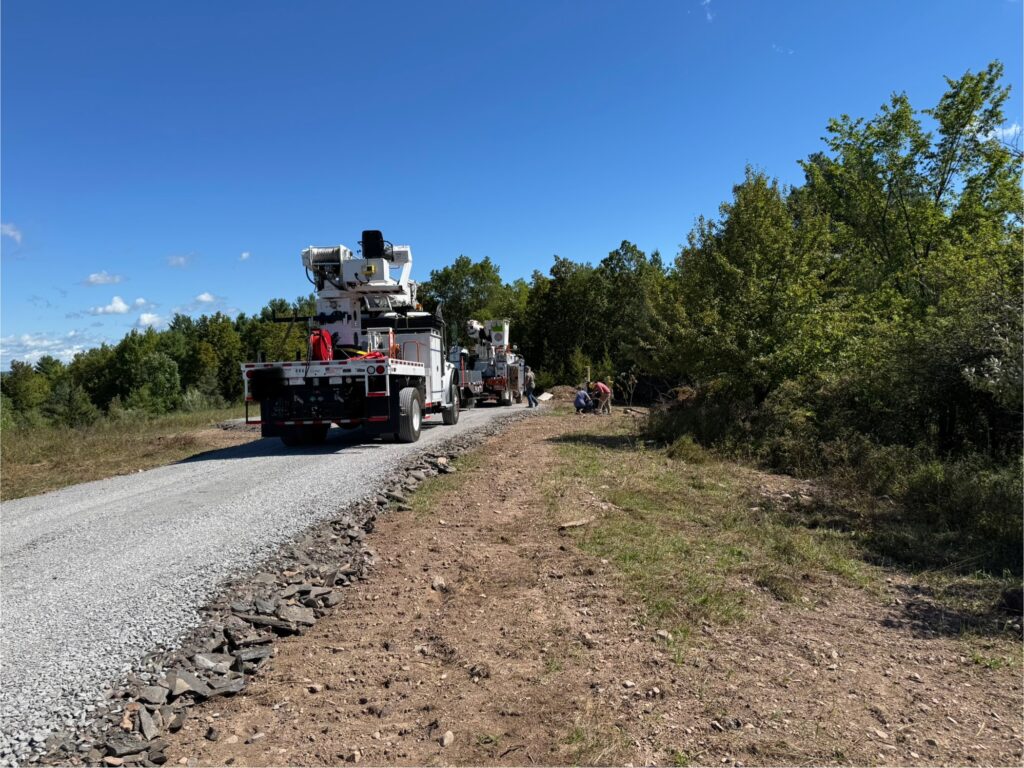
- Maybe a trusted contractor or excavator you could call for ballpark estimates on driveways, septic, or clearing. You’ll want to call multiple places to get quotes. Don’t just settle with the first person you speak to.
Even if you plan on doing a lot of work yourself, which is what you may find a lot of YouTubers doing, always have someone at the ready that you can call on. You’ll want to be able to lean on someone in case you’re not able to do a particular task.
University extension services frequently encourage potential buyers to consult local experts early—before making big financial commitments—because local rules, soil conditions, and climate patterns can vary a lot even within the same county.
If you’ve already started asking questions and building these connections, you’re not just browsing—you’re preparing.
You’re Thinking in Seasons, Not Just in Listings
Another tip is to start thinking like a landowner before you own land. I can’t tell you how many times a property looked so promising in the photos of the listing, only to arrive and not be what you expected at all. I’ve even heard of some people buying properties site unseen. In my opinion, that’s really risky to do. I cannot stress enough about not doing that. Sure, you can totally luck out and the property can be absolutely amazing. But it can also go sideways real fast.
If you already have a property or area in mind, consider making the following observations:
- Pay attention to how water moves across a property after heavy rain
- Check sun angles and wind exposure when you drive through the country
- Visit potential areas at different times of year to see mud, snow, foliage, and traffic patterns
- Read about things like frost dates, soil types, or local invasive plants
Visit the property or area in more than one season. See if you can get acquainted with some of the neighbors and talk about winter access, mud, and local weather quirks.
You’ve Started Tackling Financial “Roadblocks” Instead of Avoiding Them
There could be lots of reasons why someone may not think they’re ready to purchase land. Financial “roadblocks” may look like student loans, a car payment, credit card debt, variable income, or a mortgage.
But here’s the real question: are you ignoring those things, or are you actively working on paying off those debts?
Working on paying down those debts is what needs to be prioritized first. Here are some tips to work on paying down those debt:
- Create a clear plan and pay down high-interest debt. Try to pay more than the minimum if this is what you’ve been doing.
- Start building a small emergency fund and slowly grow it
- Keep track of your spending so you know exactly what and cut any unnecessary expenses you can.
- Save into a “land fund,” even if it’s just $50–$100 a month right now
There are lots of different methods for paying down debt like the “debt avalanche” or “snowball method”. Choose a game plan, and stick to it.
Red Flags That Might Mean “Not Quite Yet”
On the flip side, it’s also wise to recognize when waiting is the best choice. There is nothing wrong with knowing that you’re not ready yet to move forward and sometime soon just isn’t the right time.
What does not quite ready yet look like? It could look like the following:
- Your income is extremely unstable and unpredictable
- You’re relying on high-interest credit to cover monthly bills
- You’d be using all your savings for a down payment, with nothing left as a buffer
- You and your spouse/partner are not on the same page about location, budget, or timeline. This is something to really hone in on and try to get on the same page. There’s certainly a place out there that you can both agree on. You may just need to keep searching and weighing your options. If you’re not agreeing on the same location, cross it off your list and move onto the next one.
- You feel driven by pressure (“we’ll miss our chance!”) rather than peace and clarity. This is definitely not the way to approach purchasing land. Land will always come up for sale somewhere. Acting from panic or scarcity is almost always more expensive in the long run than taking a year or two to get truly ready.
If you’re not ready just yet, that doesn’t mean planning for your “someday” plot of land has to stop. Keep researching the options and really focus on where you’d like to purchase.
Final Thoughts: You Might Be Closer Than You Think
Here’s what I want you to hear: You don’t need to have every detail figured out to start preparing for buying land. You need clarity, curiosity, and consistency.
In spite of not having every detail figured out, you do need to do your due diligence and research. This isn’t something to take lightly, just like buying a home. It requires careful thought and consideration.
To summarize what we discussed about, you’re well on your way and almost ready if:
- you’re thinking deeply about your “why”. You’ve given it some serious thought and you don’t want to own land because it “just sounds good”.
- Learn about the ins and outs of purchasing land like zoning, soil, utilities, seasons
- Slowly getting your finances into a healthier place
- Practice homesteading, farming, growing food, and learning new skills in small, everyday ways
Land buying isn’t just about signing papers at closing; it’s about who you’re becoming along the way—more intentional, more rooted, and more aligned with the life you want to build. When the right property shows up and you feel both excited and grounded, that’s usually the clearest sign that you’re ready.
This post was all about land buying.
Other Posts You May Like
Thinking About Buying Land? 10+ Things to Know Before Taking the Leap
How to Turn a Small Yard into a Mini Homestead
Resources
United States Department of Agriculture (n.d.) Beginning Farmers and Ranchers Loans. USDA Farm Service Agency. https://www.fsa.usda.gov/resources/beginning-farmers-and-ranchers-loans