How to Make Homemade Pesto (And Freeze It!)
There’s nothing quite like the aroma of fresh basil, especially when it’s been blitzed into a vibrant green pesto. Whether you’re spooning it over pasta, spreading it on a sandwich, or using it to dress up grilled veggies, homemade pesto brings the garden straight to your plate. And if you’ve ever grown basil, you know how quickly it can get out of hand by late summer. That’s exactly why making pesto—and freezing it—is such a simple way to preserve the season’s flavor.
In this post, I’ll show you how to make pesto sauce from scratch, step-by-step. You’ll learn the basics of how to make pesto, variations you can try, and exactly how to freeze it so you can enjoy fresh-tasting pesto all year long.
This post is all about how to make pesto sauce from scratch.
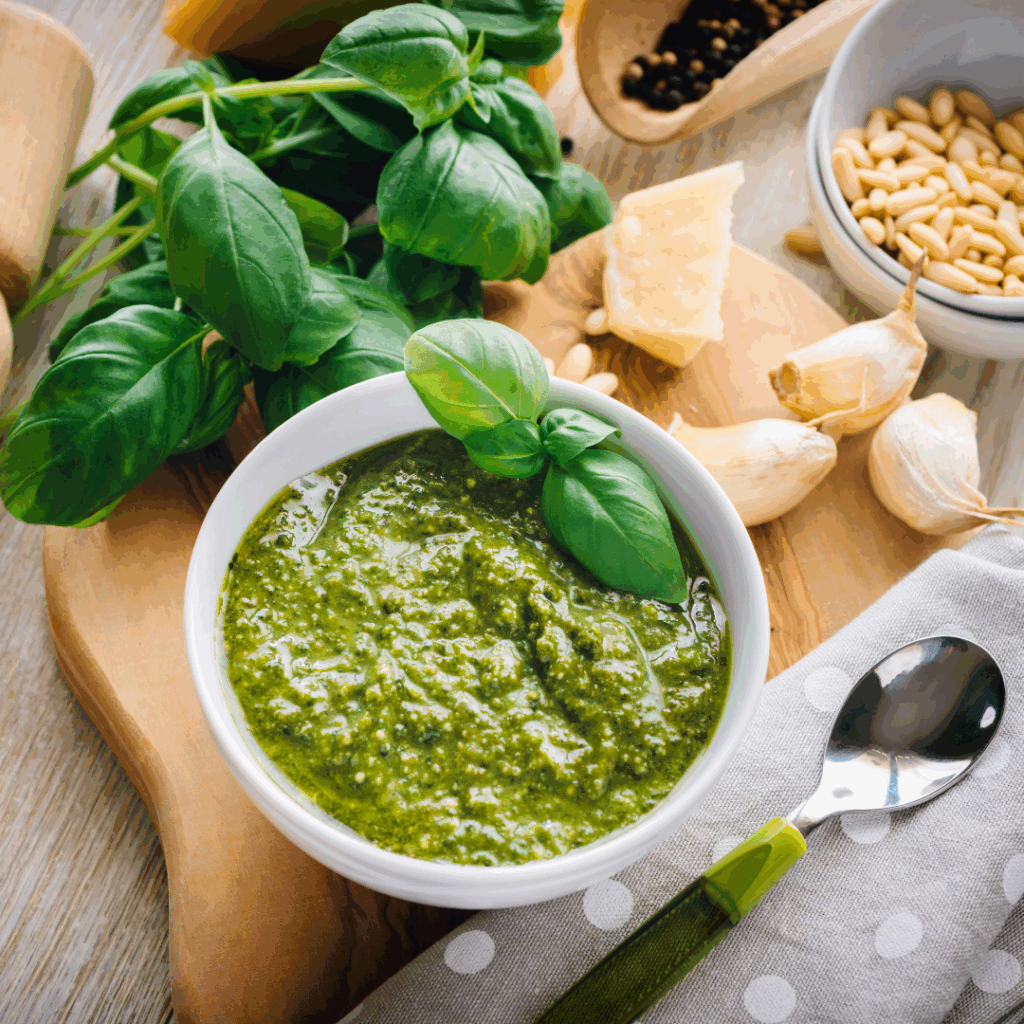
Table of Contents
What Is Pesto, Really?
Traditional pesto, or pesto genovese, comes from Italy’s Ligurian region in Genoa and is made with just a few simple ingredients: basil, garlic, pine nuts, Parmesan cheese, and olive oil. But part of pesto’s charm is how adaptable it is. If you’ve ever wondered how to make pesto with what you have on hand (or what’s growing in your garden), the good news is: it’s incredibly forgiving.
The name ‘pesto’ comes from the word ‘pestare’ in Italian or ‘pestâ’ in Genovese dialect, which means ‘to pound’ or ‘crush’. This is because of how it’s traditionally made – with a mortar and pestle – and not with a food processor. The ingredients are pounded, or ground, into the sauce. The reason you really shouldn’t use a food processor is because it can heat up the mixture, rip up the ingredients, and change the flavor. It’ll also have a grainier texture in comparison to making it with a mortar and pestle. However, it’s understandable that not everyone has a mortar and pestle in their kitchen. So use whichever one you happen to have.
Additionally, pesto is never cooked. This will also affect the flavor and ruin the pesto. Instead it’s made at room temperature and put over pasta at room temperature. It’s also not usually frozen either, but I’ve put together some methods for making it ahead of time and then freezing it.
How to Make Pesto Sauce from Scratch
Let’s talk about how to make pesto the classic way. Here’s my go-to method that gives you a smooth, flavor-packed sauce every time. This recipe makes enough for 6 people.
Tools You’ll Need
- Mortar and pestle, or food processor
- Skillet
- Cloth or paper towel
- Measuring cups and spoons
- Microplane grater for fresh Parmesan
- Silicone ice cube trays or mini containers for freezing
- Freezer-safe bags for storage
Ingredients:
- 2 cups fresh basil leaves, packed
- 2 cloves garlic
- 2/3 cup pine nuts (or walnuts for a budget-friendly option)
- 2/3 cup freshly grated parmigiano
- 2/3 cup freshly grated sardo stagionato
- 1/2 cup of olive oil (plus more if needed)
- Salt and pepper, to taste
Instructions with Food Processor
- Prep your ingredients: Rinse and dry your basil thoroughly either with a cloth or paper towel. Toast the nuts lightly in a skillet for extra depth of flavor (optional but recommended).
- Blend the base: In a food processor, pulse the garlic and nuts together until finely chopped.
- Add basil and cheese: Add the basil and Parmesan, then pulse a few times to combine.
- Stream in oil: With the processor running, slowly pour in olive oil until the mixture reaches your desired consistency.
- Season and store: Add salt, pepper, and lemon juice (if using), and give it a final pulse.
That’s it! You’ve just learned how to make pesto sauce from scratch—and it only takes about 10 minutes.
Instructions with Mortar and Pestle
- Prep your ingredients: Rinse and dry your basil thoroughly either with a cloth or paper towel. Toast the nuts lightly in a skillet for extra depth of flavor (optional but recommended).
- Crush the garlic and salt: In a mortar with pestle, begin by crush the garlic and salt until it’s a paste-like texture.
- Add basil and nuts: Next, add a handful of basil and start to grind it using circular motions. Alternate adding in the pine nuts and the basil, continuing to grind both in the mortar.
- Add olive oil: Gradually pour some of the olive oil into the mixture so that the two cheese start to become incorporated. Grind everything together in the mortar until it’s a smooth consistency.
If you want to make a looser type of sauce that’s more liquid and not as thick, reduce the amount of cheese used.
How to Make Pesto Basil Variations
Now that you’ve got the base recipe down, let’s talk about a few fun twists. There are so many types of variations that people make with
- Swap the greens or try another Italian type of pesto: Try kale or arugula. Or you can make other types of pesto that are made all throughout Italy. Here are some different types of pesto you can make:
- Pesto alla Trapanese: a Sicilian pesto made with tomatoes and almonds instead of pine nuts
- Red pesto or pesto rosso: made with sun-dried tomatoes and almonds
- Walnut pesto or pesto di noci: pesto made with walnuts
- Arugula pesto or pesto di ricola: pesto made with arugula
- Pesto di pistachio: this one is made with pistachio
- Pesto calabrese: made with roasted red peppers, chili peppers, and sometimes cured meats
- Mint pesto: made with mint, of course
(There are so many more pestos, but this should give you a nice start if you’re interested in trying one that’s not a typical basil pesto.)
- Change the nuts: Almonds, cashews, or even sunflower seeds work great.
Pesto is one of those sauces that encourages creativity. Once you understand the base ratios, you can make it your own.
How to Freeze Pesto
Although I would recommend always having fresh pesto, I’ve put together some tips on how to freeze it. This would be great on days where you’re pressed for time. It’s also extra practical if your basil plant is looking more like a shrub and you’re looking for different ideas for how to use it.
To freeze pesto:
- Portion the sauce into silicone ice cube trays or small freezer-safe containers.
- Drizzle a thin layer of olive oil over the top (this helps prevent discoloration).
- Freeze until solid, then transfer the cubes to a labeled freezer bag.
This is my favorite trick for enjoying that bright, summery flavor well into the cold months. Just pop out a cube or two as needed!
Tips for Using Pesto
There are so many ways you can use pesto and I’ve seen lots of people get really creative with it. But you can use it in the following ways:
- Tossing with hot pasta or gnocchi
- Stirring into soups or stews
- Spreading on sandwiches or wraps
- Adding to scrambled eggs or frittata
- Swirling into dips like hummus or sour cream
Final Thoughts
Learning how to make pesto sauce from scratch is one of the easiest (and most delicious) ways to preserve your herb garden harvest. It’s fast, flexible, and freezes beautifully—making it a must-have recipe in any seasonal kitchen.
Whether you’re using it fresh or thawing it mid-winter, this homemade pesto is a bright reminder of summer, ready whenever you need it.
This post was all about how to make pesto sauce from scratch.
Other Posts You May Like
Garden-Fresh Bruschetta (with Basil + Tomatoes)